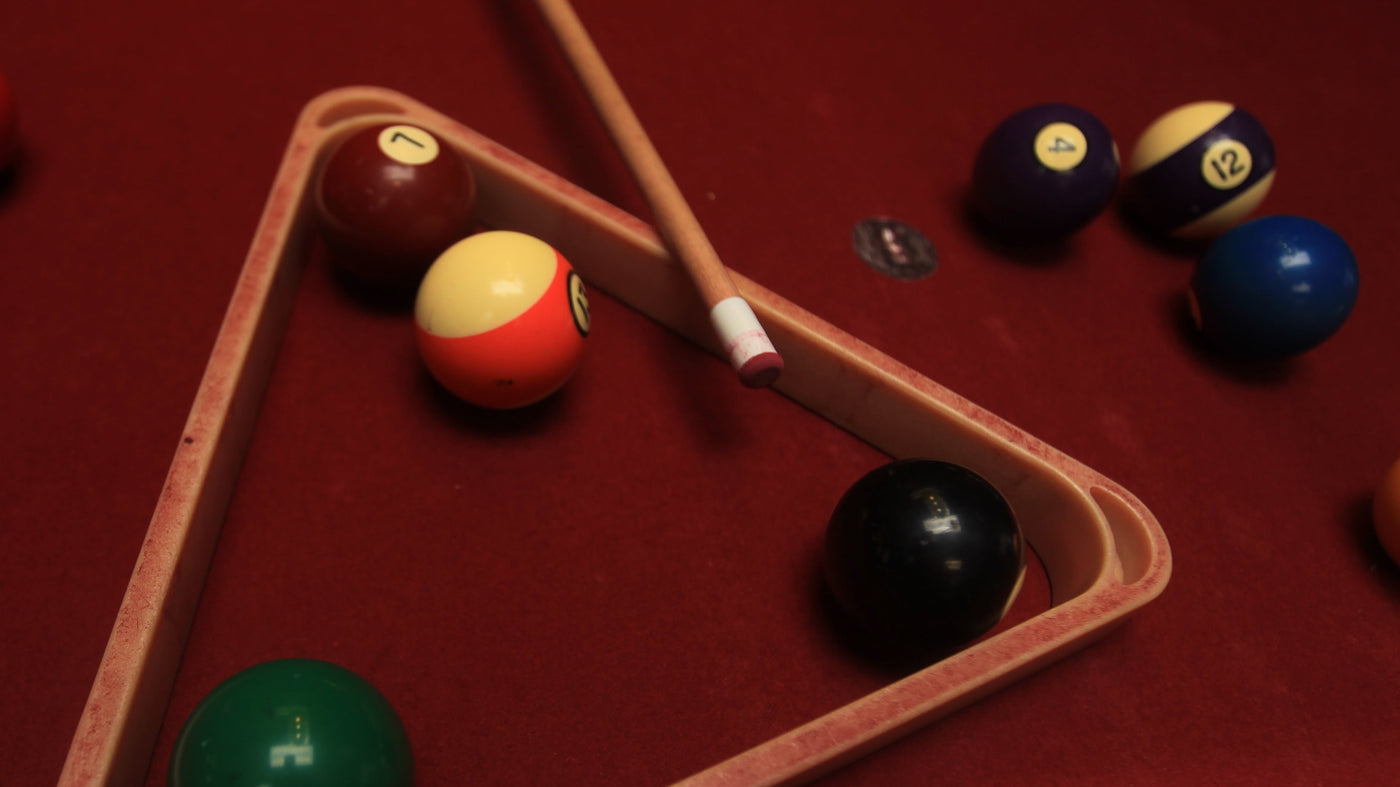

The choice between carbon fiber and low-deflection shafts is a real scenario that changes how easy the game feels, how confident you are on tough shots, and how much effort you spend maintaining your gear.
Deflection happens when side spin on the cue ball pushes it off your aim line. Understanding this helps new players aim naturally without constant compensation.
This guide breaks down both options so that you can decide what actually fits your stroke, budget, and goals. Let's get started.
How does deflection affect your game?
Deflection (or “squirt”) is what happens when you hit the cue ball off-center with spin and it jumps slightly off your aiming line.
• Standard shafts: more deflection means you must learn to “aim wrong” on purpose to land the shot right.
• Low-deflection/carbon shafts: less squirt means your cue ball path stays closer to where you actually aim, so the game feels more honest.
Carbon Fiber Shafts: Built for Stability
Carbon fiber shafts use woven composites, often 10-12mm thick, weighing 3-4 ounces, lighter than maple equivalents. They transmit 95% of stroke power directly, minimizing vibrations for a "deadly accurate" feel on long rails.
Advantages of carbon fiber pool shafts include:
• Superior durability and resistance to heat and humidity
• Minimal deflection leading to accurate shot placement
• Enhanced power transfer from cue to cue ball
• Easy maintenance compared to wooden shafts
Due to these benefits, a carbon fiber pool shaft is often the choice for players seeking consistency and longevity in their equipment.
Low-Deflection Wood Shafts: Familiar Feedback

Low-deflection cue shaft designs slice end-mass by 30-50% via multi-piece maple lamination, mimicking carbon's straightness without full stiffness. They flex slightly on impact, giving "connected" feedback pros love for reading speed.
Benefits of low deflection shafts include:
• Less need for aim compensation, especially useful for applying side spin (English)
• Greater forgiveness in cue tip placement, allowing better shot consistency
• Softer impact feel which some players prefer for touch shots
Carbon Fiber vs Low-Deflection Shafts:
|
Feature |
Carbon Fiber Shafts |
Low-Deflection Wood Shafts |
|
Deflection Reduction |
60-80% (stiff core) |
40-70% (light front mass) |
|
Weight |
3-4 oz, forward balance |
3.5-4.5 oz, adjustable |
|
Durability |
Warp/dent resistant |
Warps in humidity, dents easily |
|
Feel/Feedback |
Solid, low vibe |
Lively, spin-responsive |
|
Maintenance |
Wipe clean |
Polish, humidity control |
|
Price (New Shaft) |
$300-600 |
$250-450 |
|
Best For |
Travel, consistency |
Traditional stroke, feedback |
Data from lab tests shows carbon edges long shots by 15% accuracy.
Quick answer: Which shaft is better for you?
• If you want maximum consistency, minimal maintenance, and help with cue ball control on spin-heavy shots, a carbon fiber shaft is usually the better choice.
• If you care more about traditional “feel”, feedback through the hand, and a softer hit that many lifelong players love, a good low-deflection wood shaft can still be ideal.
How to choose: Questions that lead to the right shaft
Instead of chasing trends, use a few simple questions to match your shaft to your real needs.
1. How often do you play, and where?
• Frequent play in changing environments (home tables, leagues) points strongly toward carbon for reliability.
• Controlled-room players who already care for their equipment might be fine with a low-deflection maple shaft.
2. What frustrates you more right now: miss‑hits or maintenance?
• If you are tired of cleaning, polishing, and worrying about warping, carbon solves many of those headaches.
• If your main frustration is missing shots when you add English, either technology (carbon or low-deflection) can help; try both if possible.
3. How attached are you to “traditional feel”?
• If you love the organic, slightly softer impact of maple, start with a low-deflection wood shaft.
• If feel is less important than repeatable performance, you will probably adapt quickly to carbon and appreciate what it does for your game.
4. What is your improvement timeline?
• Players growing fast, entering leagues or tournaments, or taking coaching often benefit from the consistency of carbon right away.
• Casual players can still see a big jump with a well-chosen low-deflection shaft without going all‑in on top‑tier carbon yet.
Simple care tips to keep any shaft performing well

Even the best technology performs better when treated right.
• Store your cue in a cue case and avoid leaving it leaning against walls or in a hot car
• Wipe the shaft down regularly with a soft cloth; avoid aggressive sanding unless done by a cue technician.
• Keep the tip shaped and maintained; it has a big impact on how the shaft behaves on contact.
If damage does occur at the tip or ferrule, a simple repair guide can often help you understand what is fixable on your own and what should go to a professional.
FAQs
Q: Is a carbon fiber shaft better than a low-deflection wood shaft?
A: A carbon fiber shaft is better if you want maximum stability, low maintenance, and very low deflection, while a low-deflection wood shaft is better if you prefer a traditional feel with improved accuracy over standard maple.
Q: Does a carbon shaft improve my pool game instantly?
A: A carbon shaft can make cue ball behavior more consistent and reduce deflection, but real improvement still depends on practice and good fundamentals.
Q: Are low-deflection shafts good for beginners?
A: Yes, low-deflection shafts can help beginners by reducing how much they must adjust their aim when using sidespin, making learning position play more straightforward.
Q: How long does a carbon fiber shaft last?
A: With normal use and basic care, a carbon fiber shaft can provide many years of play because it resists warping, dents, and moisture damage much better than wood.
Q: Should I switch both my break cue and playing cue to carbon?
A: Many players start with a carbon playing shaft first, then decide later if they want a carbon break shaft once they are comfortable with the feel and benefits.
Final thoughts
Choosing between carbon fiber and low-deflection wood shafts is less about following trends and more about matching your cue to how you think, feel, and progress at the table.
If you value a modern, low‑maintenance, performance-first setup, exploring quality carbon options is a strong move.
If you still love the traditional feedback of wood but want smarter engineering, a good low-deflection shaft might be the perfect fit.
Take a little time to compare, try different hits if you can, and then pick the shaft that makes you feel most confident standing over the next important shot.
Browse these shafts at Billiards and Pool Center to match your game. Try one, feel the straightness, and watch shots line up cleaner every time.